|
FAYE LEVY Enough recipes to make Pesach last six months | |
Although many of Abadi’s recipes might seem exotic and novel, her goal was to present traditional dishes. An example is nargesi, a turmeric-flavoured spinach frittata with tiny meatballs embedded in it; it’s a popular Persian- Jewish Passover dish. A Libyan-Jewish Pesach dessert is butternut squash pudding with ginger, cinnamon and almond milk. “When I first set out to research Passover food, my initial motivation was to preserve familial and communal recipes that were on their way to being forgotten,” wrote Abadi. For her book, Abadi interviewed more than 100 people from 23 Jewish communities about their memories of Pesach recipes and family customs for celebrating the holiday. Many Ashkenazi have the mistaken impression that all Sephardim and Mizrahim have the same customs. Yet communities differ regarding which foods are permitted during Pesach. Among non-Ashkenazim, wrote Abadi, the restrictions on kitniyot “vary according to community, rabbi and perhaps even... family”. The Algerian Jews she interviewed eat no rice during Pesach, like Ashkenazim, and even no potatoes, but Egyptian Jews eat both and for the seder might serve sofrito, a rich meat stew, with potatoes. Jews from Algeria do eat legumes, such as green fava beans and peas. A popular Pesach dish among Algerian Jews is meat patties with cumin, saffron and peas. Naturally, Abadi came across a variety of charoset recipes. Her Algerian acquaintances use fresh ginger in their charoset, which they make from dried figs and dates, hazelnuts, walnuts, almonds, pears, apples and wine. Iraqi charoset is more of a sauce than a spread; it’s made of silan (date syrup) served with chopped toasted walnuts, almonds, hazelnuts and pistachios. Some of the featured recipes are only suitable for Sephardim.
Lahmeh Sofrito SOFRITO is a beef stew with a rich, fragrant sauce, with potatoes or fava beans sometimes added. INGREDIENTS
METHOD Heat 1 tablespoon oil in a large, heavy-bottomed pot over high heat for one full minute. Add meat chunks and brown on all sides, stirring occasionally, for about 10 minutes. Pour meat and its juices into a large bowl. Add remaining oil to the pot and heat over medium-high heat for 1 minute. Add onions and cook, over medium-high heat, stirring often, until soft and transparent, but not browned, about 8 minutes. Add garlic and cook, stirring, for 30 seconds. Add salt, pepper, nutmeg, ginger, cloves and turmeric and mix well. Return meat and its juices to pot. Pour in the water, add the chopped herbs and mix well. Bring to a boil over high heat and boil for 5 minutes. Reduce heat to low, cover tightly, and cook for 1½ hours. Uncover, stir and cook over medium heat for 30 minutes until meat is soft enough to easily cut with a fork and sauce has reduced to a thick gravy. If adding potatoes, cut each potato in slices. Scatter potato pieces over top of stew, cover and cook without stirring for 30 to 45 minutes until fork tender. Serve sprinkled with fresh coriander.
Nargesi THE name Nargesi comes from the Farsi word for the narcissus plant or daffodil, a springtime flower that symbolises renewal, wrote Abadi. Before serving, some sprinkle this frittata-like dish with crushed Persian dried limes for a slight tangy flavour. INGREDIENTS For meatballs:
For pie:
METHOD For meatballs: Mix puréed onions with ground meat in a medium bowl. For pie: Heat oil in large 5 or 6-litre pot over high heat for 1 minute. Add chopped onion and cook until soft and transparent, about 5 minutes. Add salt, pepper, turmeric and cumin and mix well. Cook for 1 minute. Reduce heat to medium-low. Wet your hands lightly with cold water. Taking only 1½ teaspoons of meat mixture, form it into a small, smooth meatball the size of a large cherry. (Meat will be soft and wet; be gentle). Drop meatball into pot; continue until all of meat mixture has been used. Cover pot and steam until meatballs are solid and cooked through, about 20 minutes. Once they are solid, you can stir gently to prevent sticking. Drop in parsley, coriander, dill, spinach and leeks and cover. Steam until herbs and spinach have softened, 10 minutes. Pour the hot water over top and mix gently so as not to break meatballs. Bring to the boil over high heat. Cover, reduce heat to medium, and cook for 15 minutes. Uncover and cool to room temperature, about 20 minutes. Eggs will cook too quickly if added to very hot mixture. Rewarm cooled mixture over medium-low heat for 2 minutes. Gradually pour in beaten eggs, while gently mixing to distribute evenly. Partially cover and steam over lowest heat, until eggs have solidified but are still soft and slightly wet in centre, 35 to 40 minutes. Score pie, scoop out large pieces, and arrange in layers on a serving platter. Serve warm. Serves six to eight.
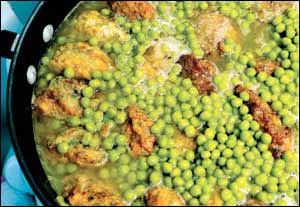
Boulettes De Viande Aux Petits Pois FOR Pesach, these Algerian-Jewish meat patties are coated with matzo meal and served over steamed crushed matzo. During the rest of the year they are coated with semolina and served over couscous. INGREDIENTS For meat patties:
For frying:
For broth:
METHOD Combine all meat patty ingredients in a large bowl. Knead until meat is soft and smooth. For frying: Heat about ½ cup oil in a large skillet over medium-high heat for 3 minutes. To test, drop a small piece of meat mixture in oil; if it fries immediately, oil is hot enough. Take ¼ cup of meat mixture and form into a meatball. Gently roll meatball in matzo cake meal to coat all sides, then dip completely into beaten eggs; shape of patty should be oval. Place patty in skillet of hot oil and fry about 5 minutes on each side or until medium-dark golden-brown. (Patties will cook more in next step). Place patty on a plate lined with paper towels. Continue coating and frying remaining patties, several at a time. For broth: Heat oil in large, heavy-bottomed pot over high heat for 1 minute. Add onion and cook for 2 to 3 minutes until transparent and soft. Add salt, pepper, turmeric, saffron and sugar and cook for 1 minute. Add water and bring to the boil over high heat. Arrange patties overlapping in a spiral to fit them all in, and bring to a boil. Reduce heat to low and pour peas over top. Cover and simmer for 45 minutes. Uncover and simmer for 15 minutes. Serve patties hot over broken matzo, with peas and broth spooned over top. Serves 10 to 15; makes 36 patties of 10cm.
Helwat Al Yaktin THIS Libyan butternut squash Passover flavoured with ginger, cinnamon and vanilla, wrote Abadi, is like a lighter version of American pumpkin pie, and can be served topped with whipped cream. INGREDIENTS
METHOD Preheat oven to 175°. Grease a 20cm square or round baking pan (preferably not metal) generously with oil and set aside. Warm 2 tablespoons oil in a large nonstick skillet over high heat for 1 minute. Reduce heat to medium-low and mix in squash cubes. Cover and cook until very soft and slightly browned, about 20 minutes, stirring every 5 minutes to prevent burning. While squash is cooking, whisk milk with egg yolks, ginger, cinnamon, sugar, salt, and vanilla in a medium bowl. Reserve 8 small squash cubes for garnish. Pour remaining squash into a food processor and pulse until smooth. Scrape puree into bowl of milk mixture and gently mix to combine. Scrape mixture into prepared baking pan, spreading it evenly with spatula. Place pan on middle rack of oven and bake for 1 hour until centre is slightly firm and edges are pulling away from the pan. (Mixture will still be a bit soft to the touch but not liquid, and overall top colour will turn deep orange-brown). Remove from heat and cool for 30 minutes, then cover with plastic wrap or foil and refrigerate for 2 hours or overnight. Serve cold, sprinkled with cinnamon. Serves eight.
|